Exclusive Interview with YÖK President Erol Özvar for Business Turk: “Our shared history, language, culture, and values form the foundation of the strong bonds between us”
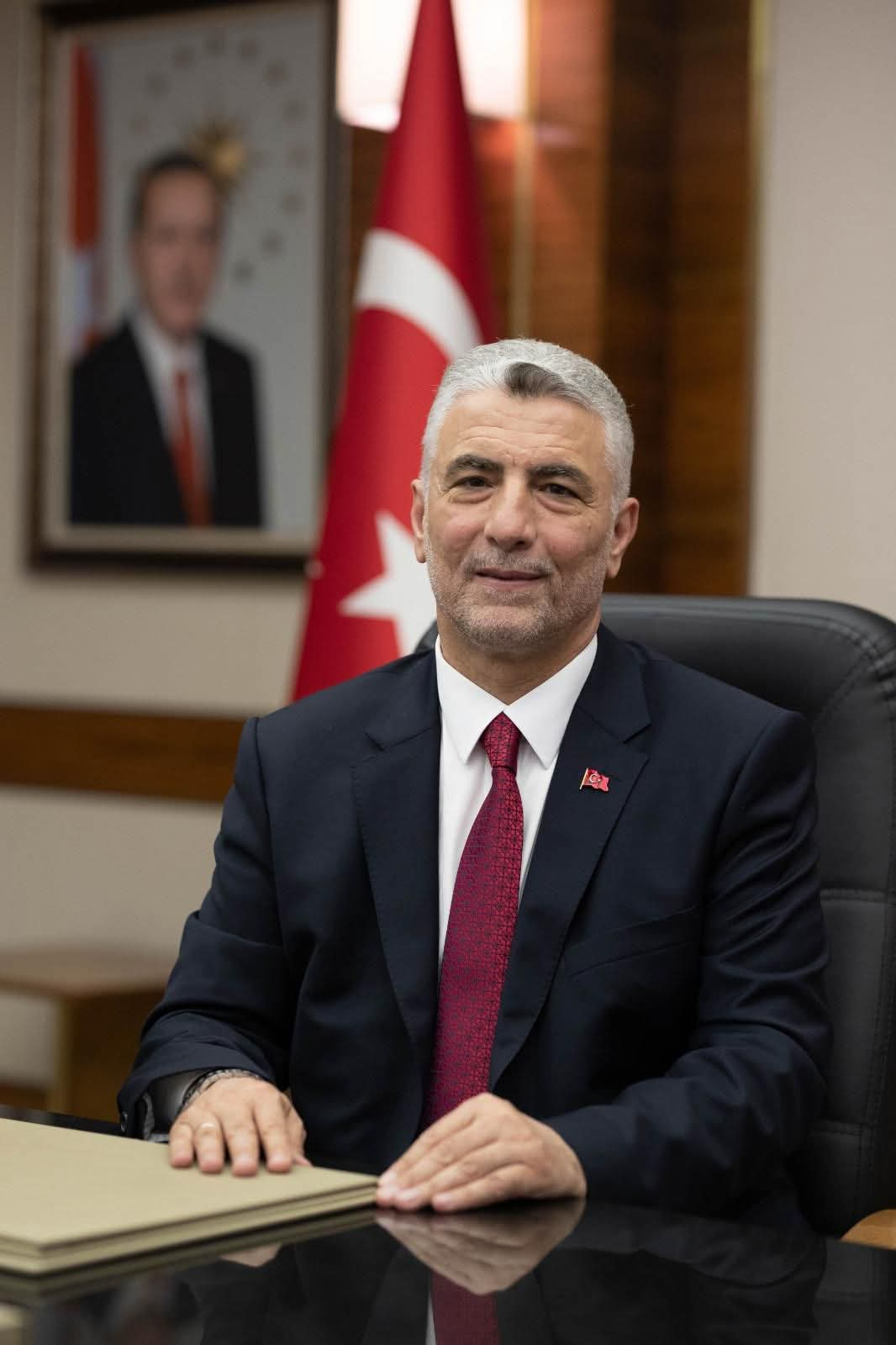
Prof. Dr. Erol Özvar, President of the Council of Higher Education (YÖK), shares the strategic details of the "Turkic World Higher Education Area" vision with Business Turk, aiming to transform the historical and cultural ties of the Turkic world into a globally competitive academic power. Stating that the region is on the threshold of a major opportunity with its young population potential and growing university infrastructure, Özvar details the institutional steps taken—ranging from a joint diploma recognition system and a quality assurance agency to R&D collaborations in strategic fields and the Orkhon Exchange Program, which will be reinforced with new funding mechanisms. Touching upon the concrete real-world successes of new-generation "umbrella university" models such as the Turkey-Azerbaijan University and the International Organization of Turkic States University, Özvar provides the key insights on how the strong Turkic world of the future will rise not only through energy and trade corridors, but as a vast "geography of knowledge" interconnected by its universities, laboratories, and researchers.
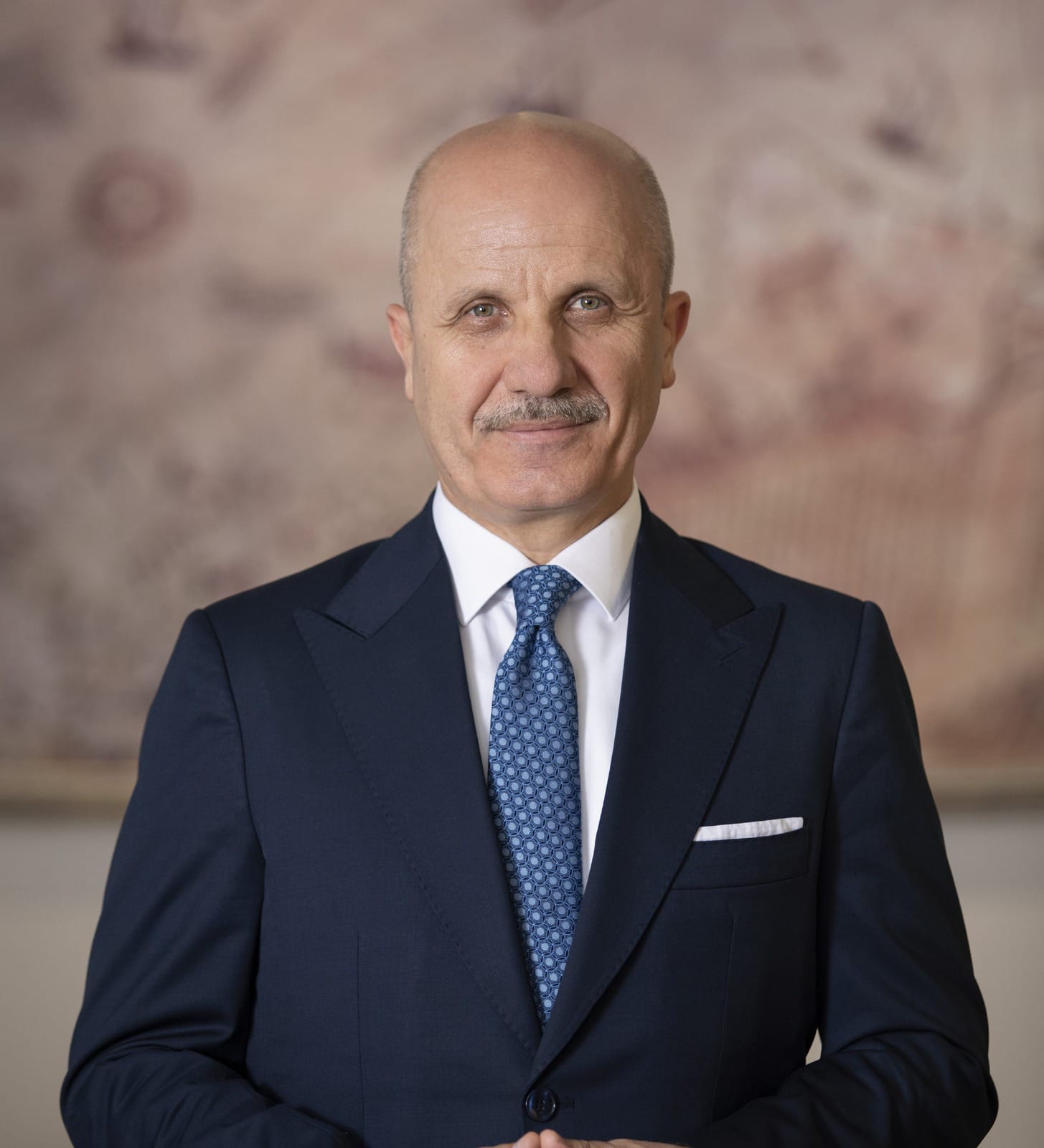
President of the Council of Higher Education, Prof. Dr. Erol Özvar, answered our questions regarding the goal of the "Turkic World Higher Education Area": How do you evaluate the potential for cooperation of the Turkic world in science and higher education?
Today, the Turkic world stands on the threshold of a new era in which it transforms its historical and cultural ties into strong partnerships of the future. Our shared history, language, culture, and values form the foundation of the strong bonds between us. However, the real power that will carry this brotherhood further in the upcoming period will be our will to produce knowledge together, pool our scientific capacity, offer new opportunities to our youth, and establish lasting institutions in higher education.
Today, an important opportunity lies before the Turkic world. Our young and dynamic population, growing university systems, expanding research capacity, and strong determination toward technological transformation harbor immense potential to carry our countries to a much higher point in science and higher education. Our duty is to transform this potential into a joint strength.
What kind of structure do you aim to establish with the Turkic World Higher Education Area? What institutional steps do you propose to realize this goal?
With the Turkic World Higher Education Area, we aim to establish a permanent structure that strengthens student and academic mobility, joint scientific output, and cooperation among our universities. Within this structure, we attach great importance to our universities benefiting from one another's capabilities and capacities, as well as developing shared mechanisms in the fields of diploma recognition and quality assurance.
It is extremely valuable for us that our leaders supported this vision at the 12th Summit of the Organization of Turkic States held in Gabala on October 7, 2025. Now, the fundamental issue ahead of us is to establish the institutions and mechanisms that will bring this vision to life.
At the Organization of Turkic States Education Ministers Meeting held previously in Shusha, we, as the Council of Higher Education, presented four important proposals in this direction: the creation of the Turkic World Higher Education Area Data Bank, the establishment of a joint body responsible for diploma recognition and equivalence, the realization of the Organization of Turkic States Higher Education Foundation, and the establishment of the Turkic World Higher Education Area Quality Assurance Agency. The common goal of these structures is to bring the higher education systems of the Turkic states closer together and to transform our cooperation—which develops on the basis of brotherhood—into a permanent institutional structure that is independent of individuals and periods.
How do joint universities established in the Turkic world contribute to higher education cooperation? How do you evaluate the steps taken in this field recently?
Joint universities are the most concrete and deeply rooted examples of higher education cooperation in the Turkic world. Khoja Akhmet Yassawi International Kazakh-Turkish University and Kyrgyz-Turkish Manas University are among the pioneering institutions of this joint will. Beyond educating students, these universities serve as vital bridges of science, carrying our shared culture, academic heritage, and vision for the future to new generations.
In recent years, we have added new and powerful links to our joint universities.
The Turkey-Azerbaijan University, established in 2024 under the "Umbrella University" model, is one of the most prominent examples of this. By bringing together the academic capacity of the distinguished universities of both countries under this model, we have transformed the understanding of "two states, one nation" into a concrete and sustainable structure in higher education.
The International Organization of Turkic States University, which we brought to life in Tashkent together with Uzbekistan, is also particularly significant as it demonstrates the new stage reached by the Turkic world in higher education. Istanbul Technical University, Middle East Technical University, Hacettepe University, and Ege University contribute to this structure with programs in strategic fields ranging from engineering to informatics, and health to agriculture. With quotas reserved for the youth of the member states of the Organization of Turkic States, we aim for the university to become one of the shared academic meeting points of the Turkic world.
Our cooperation with Kazakhstan is also advancing to a new stage. The steps taken toward Gazi University's academic activities in Kazakhstan will contribute to making Türkiye's higher education expertise more visible in brotherly geographies.
All these examples demonstrate an important reality: cooperation in higher education in the Turkic world is no longer composed merely of declarations of intent. A robust model of cooperation with real-world impact on the ground is emerging through joint universities, joint programs, and new academic structures.
Why is student and academic mobility important for the shared future of the Turkic world? What do you propose to strengthen the Orkhon Exchange Program and the institutional structures that support this mobility?
One of the most crucial elements that will determine the success of the targeted Turkic World Higher Education Area will be student and academic mobility.
An Azerbaijani student studying in Ankara, a Turkish student in Tashkent, a Kazakh student in Baku, or a Kyrgyz student in Istanbul not only diversifies educational opportunities but also strengthens the human bonds between our countries.
In this process, young people get to know each other's cultures, languages, and cities; experience different academic environments; and learn to work together. Thus, they build lasting relationships that will form the foundation for future collaborations.
For this reason, the Orkhon Exchange Program, carried out within the body of the Turkic Universities Union, is of great importance. We support the proposal to establish a dedicated funding mechanism to enable the program to reach broader audiences of students and academics. A sustainable financing structure, to which development partners and the private sector can contribute alongside public resources, could allow more students and academics to benefit from exchange programs.
We also support the idea of creating a permanent secretariat so that the Turkic Universities Union can attain a stronger and continuously functioning institutional structure.
We view enabling the youth of the Turkic world to get to know one another better, study in the same classrooms, conduct research in the same laboratories, and work together on joint projects as one of the most valuable investments in our future.
In which areas and through what kind of cooperation do you aim to transform the scientific capacity of the Turkic world into a joint strength?
In the coming period, alongside student mobility, we also need to increase joint research and scientific production.
There are many strategic areas among our countries' shared priorities, ranging from artificial intelligence to cybersecurity, biotechnology to energy, agriculture to health sciences, and climate change to disaster management.
The universities of the Turkic world possess significant scientific capacity in these fields. However, in the world of the future, merely having capacity is not enough. We must pool our universities' expertise, create joint research networks, bring our researchers together, and utilize our scientific infrastructures toward common goals.
In this regard, we attach immense importance to the memorandum of understanding we signed between the Turkic Academy and the Council of Higher Education. Through this cooperation, we aim to make the sharing of knowledge and expertise among the universities, academies, and research institutions of the Turkic world more systematic, as well as to increase joint scientific meetings, workshops, and academic activities.
The strong Turkic world of the future will not content itself with being a geography connected solely by trade routes, energy lines, or transportation corridors. Alongside these, it will be a vast geography of knowledge where strong bonds are established among its universities, laboratories, researchers, and students, and where joint scientific production thrives.
What will your proposed joint quality assurance, diploma recognition, and equivalence mechanisms provide for students and universities? How will the joint data bank support this structure?
One of the fundamental conditions for the Turkic World Higher Education Area to be permanent and reliable is a shared understanding of quality.
To enable our students to move more easily among our countries, allow our universities to develop joint programs, and ensure that academic accomplishments are more easily recognized mutually, strong coordination is required in quality assurance, diploma recognition, and equivalence processes.
Therefore, the proposed Turkic World Higher Education Area Quality Assurance Agency and the joint body responsible for diploma recognition and equivalence carry strategic importance far beyond technical regulations. As our trust in each other's universities, diplomas, and academic standards increases, student and academic mobility will become easier, and joint programs as well as academic collaborations will flourish.
The joint data bank, on the other hand, will form the information infrastructure of this system. Knowing our universities, programs, research areas, academic capacity, and cooperation opportunities better will enable us to establish the right partnerships much faster.
In the face of the global transformation taking place in higher education, what are your priorities for the shared future of the Turkic world? How do you expect the Summit of the Organization of Turkic States to be held in Ankara to contribute to these goals?
Today, global higher education is undergoing a major transformation. Artificial intelligence, digitalization, and new technologies are altering not only professions but also the ways universities educate, conduct research, and produce knowledge.
In such an era, it is certainly important for Turkic states to be strong individually. However, a true leap in science and technology will only be possible when we combine our existing strengths.
As Türkiye, we view the relationships we have established in higher education with brotherly Turkic states as a strategic matter of the future.
Under the leadership of our President, Mr. Recep Tayyip Erdoğan, the determination put forward to strengthen the unity and solidarity of the Turkic world provides a strong direction for our work in the field of higher education as well.
In the upcoming period, our priority will be to increase our joint universities, develop double and joint degree programs, boost student and academic mobility, and bring our scientists together in joint research projects. By also strengthening quality assurance and recognition mechanisms, we aim to transform the Turkic World Higher Education Area into a fully operational structure.
I consider the 13th Summit of the Heads of State of the Organization of Turkic States, to be hosted by our President Mr. Recep Tayyip Erdoğan on October 29-30, 2026, in Ankara, to be extremely important in this regard. I sincerely believe that the summit will contribute to setting new targets for our shared future by deepening multi-faceted cooperation among Turkic states and will provide momentum to realizing this vision.
The future of the Turkic world is the future of our youth. And the future of our youth depends on qualified education, strong universities, science, technology, and a culture of producing together.
Our goal is to transform the brotherhood bequeathed to us by our shared past into shared knowledge, shared science, and a shared future.
For this reason, we view the Turkic World Higher Education Area not merely as a higher education project, but as a strategic investment in our shared human resources, our scientific competitiveness, and our future generations.
With the strength we derive from the past, we will build the future together.