From Past to Future, The Turkic World: From Unity to Integration
Binali Yıldırım, Chairman of the Council of Elders of the Organization of Turkic States (OTS), emphasizes that İsmail Gaspıralı's ideal of "Unity in language, thought, and action" must be updated for the age of artificial intelligence and digitalization. Pointing out Uzbekistan's position as a powerful actor within the OTS, Yıldırım aims to extend physical integration in the Turkic world to digital infrastructures through projects such as the "Digital Turkic Corridor" and shared large language models.
From Past to Future, The Turkic World: From Unity to Integration
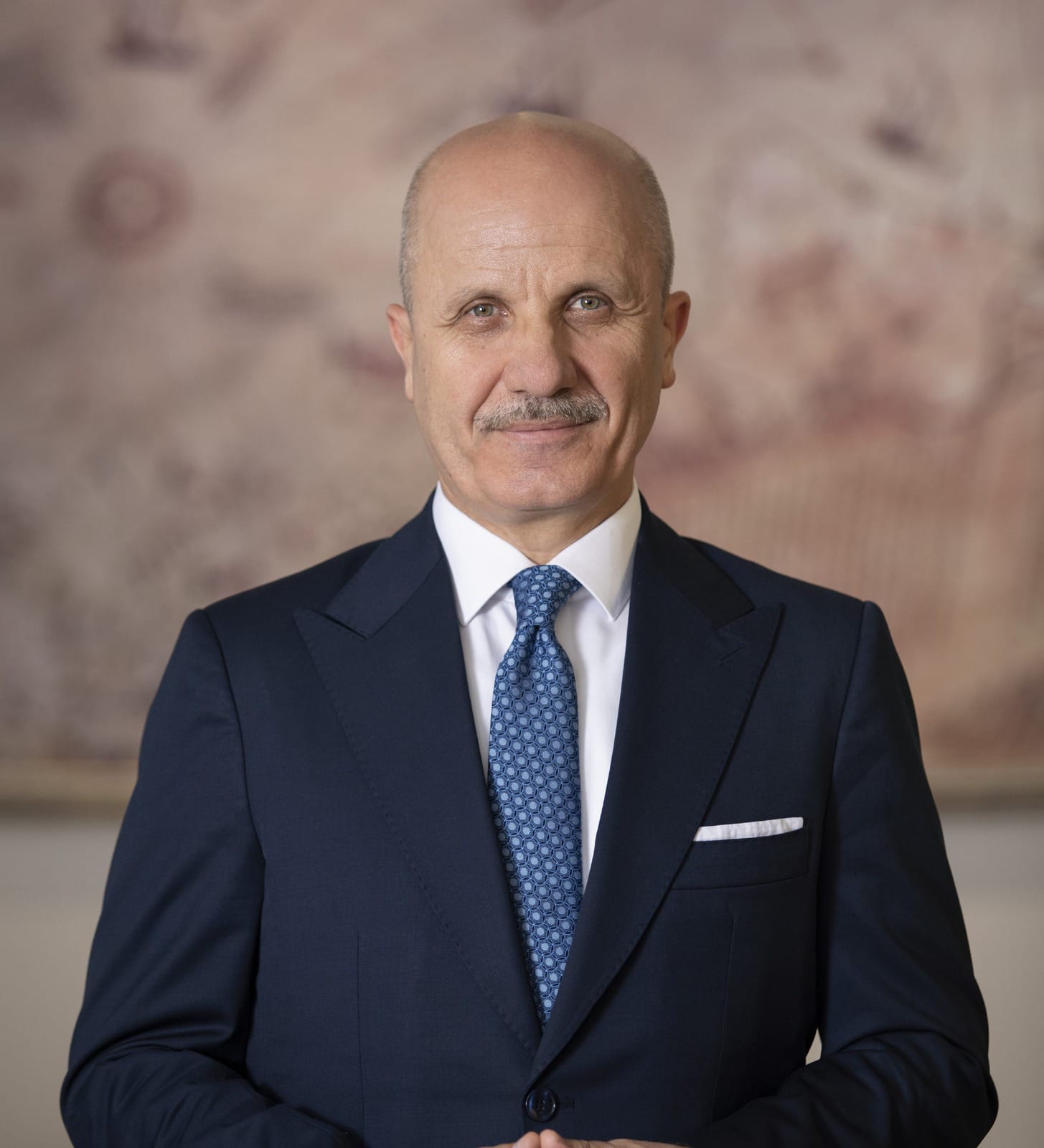
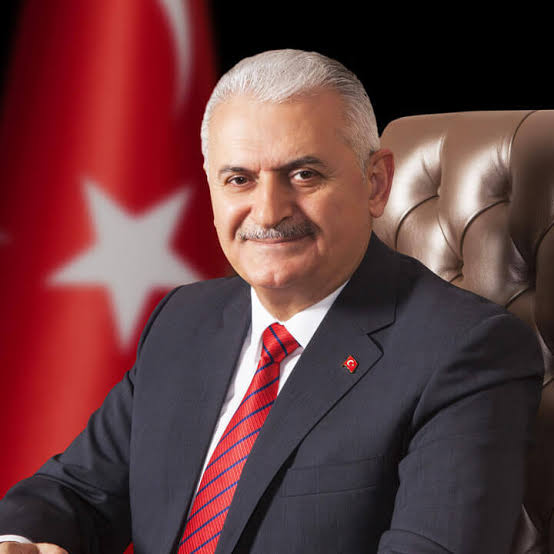
Binali YILDIRIM
Chairman of the Council of Elders of the Organization of Turkic States
The ties connecting the Turkic world were not established yesterday. We are the children of the same history, the same basin of civilization, the same culture, and shared values. Although our paths diverged from time to time over the centuries, our hearts were never severed from one another.
Today, however, an important historical opportunity lies before us. We are no longer speaking of a Turkic world that merely remembers its shared past, but one that builds its shared future together. The distance covered by the Organization of Turkic States in recent years is the most concrete indicator of this. Ever-expanding areas of cooperation—ranging from culture to education, trade to energy, transportation to technology, and youth to digitalization—show that the brotherhood in the Turkic world is transforming into an institutional and strategic partnership.
İsmail Gaspıralı’s ideal of “Unity in language, thought, and action,” put forward more than a century ago, has gained a new meaning today. Now, our duty is to complete our unity of hearts with unity in transportation, trade, energy, technology, digital infrastructure, and artificial intelligence.
Uzbekistan's Transformation Powered the Turkic World
Within this great march, the transformation exhibited by brotherly Uzbekistan over the last decade is a success story that deserves special emphasis. Under the leadership of President Mr. Shavkat Mirziyoyev, Uzbekistan has entered a new era in which it opens up more to the world, expands its economy, improves relations with its neighbors, strengthens regional cooperation, and increasingly consolidates its place within the Turkic world.
Uzbekistan's full membership in the Turkic Council in 2019 is a historic turning point in this regard. In the short period since then, Uzbekistan has become not only an important member of our organization, but also one of its strong actors putting forward new ideas, developing concrete projects, and shaping discussions regarding the future of the Turkic world.
We closely observe and take great satisfaction in Mr. Shavkat Mirziyoyev's sensitivity toward the unity and solidarity of the Turkic world, his strong determination toward reinforcing the Organization of Turkic States, and his valuable support for the work of our Council of Elders.
His close interest in and support for the work of our Council of Elders are particularly precious to us.
The integration of the Turkic world will only be possible through the strong political will of our heads of state and the ability of our institutions to transform this will into concrete projects. Today, the approach displayed by Uzbekistan and Mr. Shavkat Mirziyoyev serves as an important example of this determination.
From the Silk Road to the Digital Turkic Corridor
When discussing the future of the Turkic world, we must now look not only at the issues of today, but also at which direction the world is heading. For this reason, I find it extremely valuable that the Informal Summit of the Organization of Turkic States, held in Turkistan on May 15, 2026, convened under the theme of "Artificial Intelligence and Digital Development."
The proposals put forward by Mr. Shavkat Mirziyoyev at this summit offer an essential perspective on how the digital integration of the Turkic world can take shape in the period ahead.
Mr. Shavkat Mirziyoyev proposed:
Establishing a strategic cooperation network in the field of artificial intelligence within the OTS,
Developing the "Digital Turkic Corridor" concept to facilitate regional data exchange,
Bringing together our shared historical and cultural resources under a single big data platform,
Further digitalizing transportation and customs processes,
Establishing the Turkic Cybersecurity and Digital Infrastructure Protection Alliance to strengthen the cybersecurity of the Turkic world.
These are not independent ideas; on the contrary, they are complementary pieces of a new Turkic world architecture taking shape before us. Centuries ago, caravans carried goods, ideas, and cultures along the Silk Road.
Today, trains and trucks carry cargo along the Middle Corridor. Tomorrow, data, information, and artificial intelligence will be carried through the fiber lines of this very same geography. Therefore, the new Silk Road of the Turkic world must be both physical and digital.
We have connected our roads. We are connecting our trade. Now, it is time to connect our data, digital infrastructure, and artificial intelligence capacity.
The Language of the Turkic World in the Age of Artificial Intelligence
There is another matter here that requires our special attention. Artificial intelligence is not merely a technological transformation; it is simultaneously a matter of language, culture, knowledge, and civilization. Today, large language models have begun to transform almost every sphere of life, from knowledge production to education, and from the economy to public services.
It is unthinkable for the Turkic world to be a mere user of this great transformation. We must robustly transfer the dictionary assets, literary works, historical texts, academic knowledge, and contemporary linguistic treasures of our vast language and culture basin—spanning from Türkiye to Azerbaijan, Kazakhstan to Kyrgyzstan, and Uzbekistan to Turkmenistan—into the digital world.
Recognizing this need as the Council of Elders, we have initiated work on Large Language Models to encompass the Turkic languages. Our goal here is not simply to produce a technological product.
It is to contribute to building an infrastructure that will keep the shared linguistic treasure, history, culture, and knowledge base of the Turkic world alive in the age of artificial intelligence, and further strengthen the closeness among Turkic languages in the digital domain.
We consider it vital that the historic steps we have taken toward a common alphabet are completed with a common digital language infrastructure.
Developing large language models that understand Turkic languages, know the history and culture of the Turkic world, and transform language differences between our countries from an obstacle into a richness will be one of the strategic issues of the upcoming period.
This work initiated by our Council of Elders is also complementary in nature to the approach put forward by Mr. Shavkat Mirziyoyev at the Turkistan Summit regarding strategic cooperation in AI, shared data infrastructure, and the Digital Turkic Corridor. For if we cannot carry our language into the technologies of the future, we cannot carry our culture to future generations with the strength we desire.
In the age of artificial intelligence, the Turkic world must be not merely a user of technology, but a basin of civilization that carries its own language, culture, history, and knowledge base into the technologies of the future.
The Duty of Elders Is to Guide the Future
In Turkic culture, an elder (aksakal) does not mean simply an advanced age.
An aksakal represents experience, memory, consultation, and guiding wisdom in challenging times. We view the Council of Elders of the Organization of Turkic States within this very understanding. Our duty is not merely to narrate our past, but to clear the path for the future using the experience drawn from that past.
For this reason, as the Council of Elders, we attach great importance to supporting the vision set forth by our heads of state, further strengthening the brotherhood among our countries, enabling our youth to know one another better, developing a consciousness of shared history and culture, and realizing new ideas regarding the future of the Turkic world.
The work we have initiated on Large Language Models is a result of this understanding.
Being an elder requires building a bridge between the past and the future. On one side stands our thousands-of-years-old history, culture, and heritage of civilization; on the other side stand our youth, technology, digitalization, and artificial intelligence.
Our duty is to connect these two worlds.
Because the greatest legacy we will leave to the generations after us is not merely the memory of a glorious past, but a strong Turkic world capable of acting in unity.
From Unity to Integration
At the point we have reached today, we no longer need to prove the existence of the Turkic world or its desire for unity.
The issue from now on is to make this unity concrete.
We must trade more.
We must connect our transportation networks.
We must develop our energy cooperation.
We must bring our youth, universities, and scientists together more often.
We must carry our shared culture and language into the technologies of the future.
We must connect our data centers, digital platforms, and artificial intelligence capacities.
In short, we must transform our geography of hearts into a geography of cooperation, production, technology, and prosperity.
I believe that the upcoming Ankara Summit will mark a new milestone in this great march of the Turkic world.
As Mr. Shavkat Mirziyoyev stated at the Turkistan Summit, the integration of the Turkic world is a long-term strategic issue directly concerning the destiny of our brotherly peoples.
What falls upon us is to deliver the brotherhood we inherited from our ancestors to future generations in a much stronger state.
Our roots are one, our hearts are one, our future is one.
Now is the time to build this shared future together.